
When it comes to your skin health, what do you think is driving the aging process? Most people think of products, treatments, or even genetics. However, there’s another factor that’s often overlooked: inflammation. More specifically, something called inflammaging which is a slow, underlying level of inflammation in the body that quietly accelerates skin aging over time.
Have you ever wondered why two people can receive the exact same treatment… and one heals beautifully while the other experiences redness, sensitivity, or slower recovery? The difference often isn’t the treatment itself but rather how the body responds to it.
Your nervous system plays a powerful role in how your skin heals, how much inflammation develops, and how well your results last. Let’s chat more about how your skin’s behavior gets directly impacted by your body’s internal regulation!
Why Your Skin Sometimes Feels “Off”
Think of your body as constantly reading the room. When it feels stressed, overwhelmed, or on edge, it shifts into protection mode. When it feels calm and safe, it shifts into repair mode. Your skin follows that same lead. At the center of this is your autonomic nervous system or your body’s internal autopilot. It’s always working behind the scenes, regulating heart rate, circulation, inflammation, stress hormones, and healing. This system has two branches that are always active, but one tends to take the lead depending on how you’re feeling.
Stress Mode: Fight or Flight
When your body perceives stress (whether that’s emotional, physical, or even anticipation before a treatment) it activates the sympathetic nervous system, also known as “fight or flight.” In this state, your body is focused on protecting you, not repairing you. Blood flow shifts, inflammation increases, and your skin can become more reactive. This is often when we see increased redness, sensitivity, breakouts, slower healing, or even prolonged downtime after treatments. Over time, this constant low-level inflammation can contribute to what we call “inflammaging,” where inflammation quietly accelerates the aging process.
Calm Mode: Rest and Heal
On the other hand, when your body feels safe and relaxed, the parasympathetic nervous system takes over. This is your “rest and heal” state, and it’s where real skin repair happens.
In this state, circulation improves, oxygen delivery to the skin increases, and inflammation decreases. The skin becomes more receptive to treatments and products, and healing happens more efficiently. This is why some clients seem to recover so quickly! However, recovery is not created equal.
The Role of the Vagus Nerve
A key player in this process is the vagus nerve, which acts as the main communication pathway for relaxation in the body. It connects the brain to the face, neck, and body, helping regulate how the body responds to stress and inflammation.
One of its most fascinating roles is controlling inflammation through what’s known as the cholinergic anti-inflammatory pathway. In simple terms, it helps signal to your immune system when it’s time to calm down. When this system is supported, we often see less redness and swelling after treatments, faster recovery, and stronger skin barrier repair. Supporting the vagus nerve allows the skin to respond more efficiently and heal more predictably.
Why it Matters
When this pathway is functioning well, the body is better able to regulate inflammatory responses after aesthetic treatments. This can result in reduced redness and swelling after procedures, faster recovery following injectables, lasers, or microneedling, and improved repair of the skin barrier. Supporting the vagus nerve helps the skin respond more efficiently to treatments and allows healing processes to occur more smoothly.
Additionally, the way your aesthetic provider interacts with you during treatments can also influence the nervous system. That’s why our team incorporates elements such as slow, rhythmic touch and pressure, neck and jaw techniques, gentle stimulation of the scalp, and encourages slow breathing to all signal safety to the body. When the nervous system senses safety, it naturally shifts toward the parasympathetic state. Even the energy of the treatment environment matters, as the nervous system often co-regulates with the people around us. Our team strives to maintain a calm presence, so that way our clients’ nervous systems may mirror that calm.
Where GlacialSkin Comes In
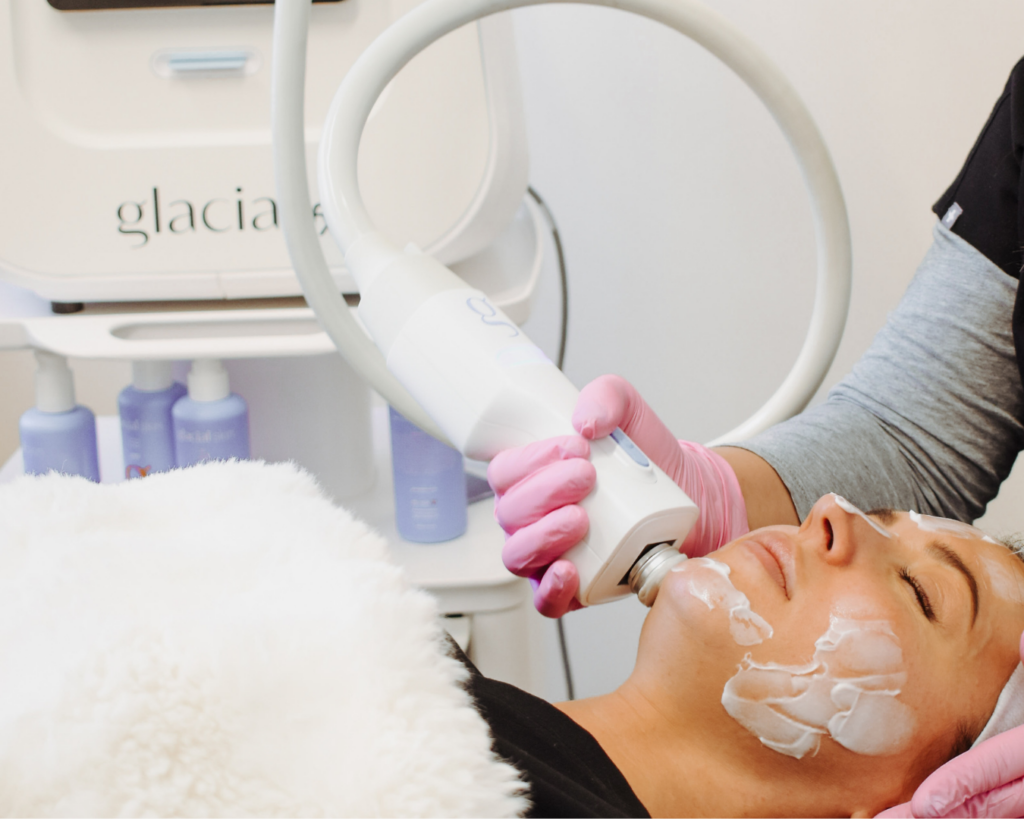
This is one of the reasons we love our GlacialSkin treatment utilizing cryotherapy. While this treatment is known for calming inflammation on the surface, its benefits go way deeper! When controlled cooling is applied to the face, it stimulates nerve pathways that communicate with the brainstem and influence the vagus nerve. This can help shift the body out of a stress response and into a more relaxed, parasympathetic state.
As a result, heart rate can slow, breathing becomes more regulated, and inflammatory signals decrease. For clients with acne, rosacea, or a compromised skin barrier (those who often have heightened stress responses in the skin), or after an advanced aesthetic treatment, this can make a noticeable difference in both comfort and recovery.
How Your Nervous System and Your Skin’s Health Go Hand-in-Hand
Ultimately, aesthetic treatments do not only affect the skin but they actually influence the entire body. When the body feels safe, supported, and relaxed, the skin can focus on healing and regeneration. When the body feels stressed, it prioritizes protection instead. By understanding the relationship between the nervous system and skin health, we can take a more thoughtful approach to aesthetic care past the treatment room. Supporting both the skin and the nervous system allows treatments to work more effectively and helps create healthier, more predictable results over time.
At Thistle Medical Aesthetics, we believe the best outcomes happen when we care for the whole system, not just the skin’s surface. When the body feels calm, the skin is able to do what it does best: repair, restore, and glow!
Interested in learning more about our GlacialSkin treatment? Schedule a skin analysis here with one of our estheticians/master estheticians today!